 Dental Emergencies Welcome
 Free Second Opinions
 (972) 546-3888
 Request an Appointment
Implants vs. Bridge: Which Option Fits You?
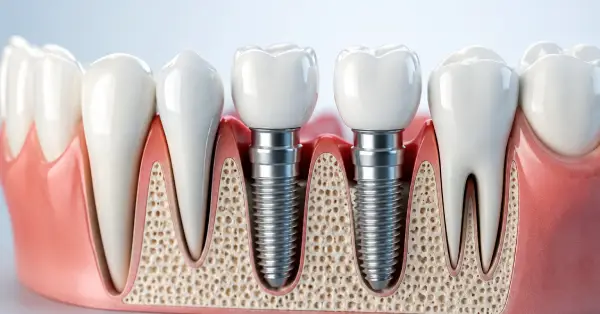
If you are missing a tooth, the first question is usually simple: "What will look natural and let me chew again?" The second question is the one that really drives the decision: should you replace the tooth with a dental implant or a dental bridge?
This guide is designed for patients comparing options, including people searching for dental implants near you, and wanting clear tradeoffs, not sales pressure. Both treatments can be excellent, but they solve the problem in different ways.
TL;DR - Implants vs. Bridge, Simplified
A bridge can be a faster, tooth-supported fix when the teeth next to the gap are strong or already need crowns. An implant replaces the root and crown without leaning on nearby teeth, which can be a big long-term advantage.
- Choose an implant when you want to replace one tooth without involving neighbors and support bone where the tooth is missing.
- Choose a bridge when the adjacent teeth already need crowns, or when implants are not a fit medically or financially.
- Maintenance is different: bridges require special cleaning under the "false tooth," and implants require excellent gum care.
- Ask about long-term repairs: which parts can be repaired and what failure looks like for each option.
- Follow-up matters: many patients prefer care close to home for check-ins and adjustments.
What a Bridge and an Implant Actually Replace
Dental Bridge: A Tooth-Supported Replacement
A traditional bridge "bridges" the space of a missing tooth by attaching a false tooth to crowns on the neighboring teeth. Those neighboring teeth, often called abutment teeth, carry the biting forces for the missing-tooth area.
If you want to learn how bridges are made and what affects longevity, our dental bridge page goes deeper on materials and care.
Dental Implant: A Root Replacement Plus a Crown
A dental implant replaces the tooth root with a small post, and then a crown is placed to restore function and appearance. Because it is anchored in bone, it does not need support from the neighboring teeth the way a bridge does.
Many patients start their research by reading about broader implant options, including full-arch solutions. Our implant services overview is a helpful place to see how different implant approaches are used for different levels of tooth loss.
The Decision Factors Grand Prairie Patients Bring Up Most
1) Impact on Neighboring Teeth
This is often the biggest difference. A bridge typically requires reshaping the teeth next to the gap so crowns can fit over them. An implant replaces the missing tooth without altering neighboring teeth.
- A bridge may be a smart fit if the adjacent teeth already need crowns due to large fillings, cracks, or prior work.
- An implant may be a smart fit if the neighboring teeth are healthy and you want to keep them untouched.
2) Long-Term Maintenance What You Will Actually Do at Home
Both options require consistent care, but the routine is not identical.
- Bridge care: you will need a way to clean under the bridge where food and plaque can collect, many people use floss threaders or water flossers.
- Implant care: you will focus on keeping gum tissue healthy around the implant and maintaining excellent daily plaque control.
One clinical observation our team sees often is that the "best" option on paper can become the wrong option in real life if the cleaning routine does not match a patient's habits. At your visit, ask your dentist to walk you through exactly how you would clean the bridge or the implant crown.
3) Timeline and Number of Visits
Timelines vary based on your mouth, the location of the missing tooth, and whether any additional steps are needed. In general, bridges can sometimes be completed in fewer steps because they rely on existing teeth, while implants may include a healing period between placing the implant and placing the final crown.
4) Budget and Planning Options
A bridge and an implant have different cost structures, and both are an investment. If you are weighing options, it can help to review planning tools and coverage possibilities before you decide.
For practical next steps, our insurance and financing page explains ways patients commonly plan for treatment.
When an Implant Is Usually the Clearer Choice
An implant is often favored when you want a stand-alone solution for a single missing tooth and the teeth next to the space are healthy.
- You want to avoid crowning otherwise healthy neighboring teeth.
- You are looking for a fixed, non-removable replacement that feels more like an individual tooth.
- You want a solution that is easier to "isolate" if repair is ever needed, one tooth, one restoration.
When a Bridge Can Be the More Practical Option
A bridge can be a very reasonable choice when the teeth next to the gap already need crowns, or when an implant is not the best fit.
- The adjacent teeth already need crowns, so a bridge restores multiple needs at once.
- You prefer a plan that may be completed with fewer surgical steps.
- You want to restore a space and are comfortable with the cleaning routine required under a bridge.
Why Dental Implants Near You Is a Real Consideration
Whether you choose a bridge or dental implants, follow-up and maintenance are part of success. Fit checks, bite adjustments, hygiene visits, and occasional repairs are easier to stay on top of when your care is close to home.
If you are looking for dental implants near you in Grand Prairie, consider asking any office you call how many visits your treatment plan typically includes and what ongoing maintenance looks like after the final tooth is placed.
Questions to Ask at Your Consultation
A good consultation is not just "which is best?" It is "which is best for me?"
- What happens to my neighboring teeth with a bridge vs. an implant?
- What is my long-term maintenance routine for each option?
- What can realistically go wrong, and how is it repaired?
- What is the timeline and number of visits for my specific case?
- Are there other options I should consider, like implant dentures if I am missing multiple teeth?
FAQs
It depends on your teeth, bone support, and goals. Dental implants replace the tooth without relying on neighboring teeth, while a traditional bridge relies on the teeth next to the space. A consultation helps confirm which is more predictable for your bite and long-term maintenance.
A bridge typically requires shaping the adjacent teeth to support the bridge. That is not automatically "bad," but it is an important tradeoff to understand. If the neighboring teeth already need crowns, a bridge may be a more natural fit.
Both can last a long time with excellent home care and regular dental visits. Implants have different risk factors than bridges, for example, gum health around an implant vs. decay risk on supporting teeth for a bridge. Your dentist can help you compare lifespan expectations based on your specific situation.
Follow-up visits matter for both implants and bridges. Choosing dental implants near you can make it easier to attend check-ins, address bite adjustments, and keep up with long-term maintenance. Ask how many visits are typically needed for your plan.
Ask which option best protects nearby teeth, what the cleaning routine will be at home, how repairs are handled, what your timeline looks like, and what alternatives exist, such as implant dentures if multiple teeth are missing. Clear answers help you choose confidently.
Related Reading
- Dental bridge treatment
- All-on-4 and dental implant options
- Implant dentures
- Meet Dr. Ronak Patel
- Contact our dental team
Bottom Line: Choose the Option You Can Maintain Confidently
A bridge can be a smart, predictable fix in the right situation, especially when neighboring teeth already need crowns. Dental implants can be a strong long-term choice when you want to replace a tooth without altering the teeth around it. The right answer depends on your mouth, your timeline, and your ability to keep the area clean for years to come.
Ready to Compare Your Options in Person?
If you are weighing a bridge vs. dental implants in Grand Prairie, schedule a consultation with Dr. Ronak Patel at Fresh Family Dental. Call (972) 546-3888 to get started.


5 Stars
based on 14 reviews