 Dental Emergencies Welcome
 Free Second Opinions
 (972) 546-3888
 Request an Appointment
Root Canal or Extraction? A Tooth-Saving Decision Guide
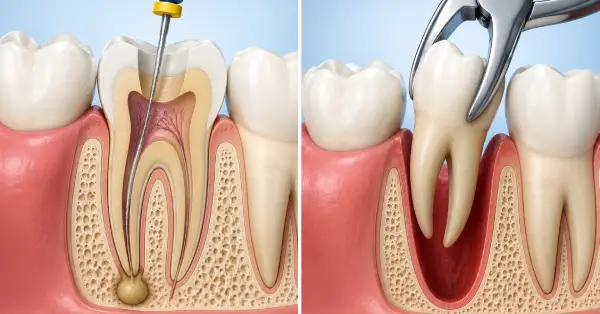
When you are in pain, the biggest question is usually simple: can the tooth be saved, or does it need to come out? If you are searching for a root canal in Grand Prairie, chances are you want relief fast, but you also want to make the right long-term decision.
In our previous blog, "Emergency Dentistry: How to Prepare a Dental Kit," we discussed practical ways to be ready for dental surprises. In this article, we focus on what happens when the surprise is already here: deciding between root canal treatment and extraction.
TL;DR - How Dentists Choose Between Saving vs Removing a Tooth
Dentists usually try to save a tooth when the infection can be cleaned, the tooth can be restored, and the result will be predictable. Extraction is recommended when the tooth is too damaged, cracked, or unstable to last.
- Root canal is often chosen when the tooth can still be restored and sealed.
- Extraction is more likely when there is a deep crack, severe decay, or advanced bone loss.
- Waiting can raise risk when pain comes from infection (especially with swelling or fever).
- Emergency dentistry focuses on fast diagnosis and stabilizing the problem first, then planning the best next step.
- A clear exam and X-rays are what turn anxiety into an actual plan.
First: What Is The Real Goal, Save The Tooth Or Stop The Problem?
Most people understandably say, "Save my tooth." Clinically, the goal is slightly different: stop infection and pain in the most predictable way, while protecting your long-term bite and oral health.
Sometimes that means saving the tooth with endodontic care. Sometimes it means removing a tooth that cannot be restored and planning a replacement. If you are in active pain, our emergency dentistry services page explains what typically qualifies as urgent and why early evaluation matters.
How Dentists Evaluate A Tooth: The Decision Framework
1) Can The Infection Be Cleaned And Sealed?
Root canal treatment is designed to remove infected or inflamed tissue inside the tooth and seal the space so bacteria cannot keep re-entering. If the canals can be cleaned and the tooth can be sealed well, saving the tooth is often possible.
2) Is There Enough Healthy Tooth Structure Left To Restore?
A root canal treats the inside of the tooth, but you still need enough tooth above the gumline to rebuild it afterward. If a tooth is too broken down, the restoration may not be stable long-term, even if the root canal is successful.
3) Is The Tooth Cracked (And If So, Where)?
Cracks can be tricky. A small crack in the crown portion of a tooth may be treatable. A deep crack that extends below the gumline, especially a vertical root fracture, can make saving the tooth unpredictable. In those cases, extraction may be the safer recommendation.
4) What Does The Bone And Gum Support Look Like?
Even a tooth with a treatable nerve problem may be a poor candidate for saving if there is advanced bone loss or severe mobility. Healthy support tissues help the tooth stay functional after treatment.
5) What Will Your Bite Need After Treatment?
In many cases, a treated tooth needs reinforcement to handle chewing forces. That is why a crown is often recommended after root canal treatment, especially for molars. If you want to learn how coverage restorations protect a weakened tooth, see our dental crowns page.
Symptom Triage: When A Root Canal Is Likely Vs When Extraction Becomes More Likely
Symptoms That Often Point Toward Root Canal Evaluation
- Lingering sensitivity to hot or cold that lasts after the stimulus is gone
- Spontaneous throbbing pain (especially at night)
- Pain when biting that is new or worsening
- A pimple-like bump on the gums (possible draining infection)
- Darkening of a tooth after trauma (may indicate nerve damage)
Findings That More Often Push The Conversation Toward Extraction
- A vertical crack that extends into the root
- Decay that goes too far below the gumline to restore predictably
- A tooth that is severely loose from bone loss
- Repeated infection with poor remaining tooth structure
Experience in our office: patients often assume that "extraction is quicker and cheaper," but once you factor in how a missing tooth affects chewing, shifting, and future treatment needs, the best decision is usually the one that solves the problem and supports a stable bite.
What Happens If You Wait Too Long?
Not every toothache is an emergency, but tooth pain caused by infection can escalate. Waiting can mean more swelling, more bone involvement, and fewer predictable options.
Go In As Soon As Possible If You Have:
- Facial swelling (especially if it is spreading)
- Fever, chills, or feeling unwell along with tooth pain
- Difficulty swallowing or breathing
- Difficulty opening your mouth
- Severe pain that is not controlled with over-the-counter medication
If you need guidance on what qualifies as urgent, start with our emergency dentistry in Grand Prairie resource and then call to be seen.
What To Expect Next (No Surprises)
At The Exam
A focused exam typically includes reviewing symptoms, checking the tooth and gums, testing the tooth response, and taking X-rays. This is how we confirm whether the pain is coming from the nerve, a crack, gum issues, or something else.
If A Root Canal Is Recommended
The plan usually includes removing the infected tissue, disinfecting the canal space, sealing the tooth, and then restoring it so it can function again. You can read a deeper overview on our root canal treatment page.
If An Extraction Is Recommended
The priority is safe removal and comfort, then discussing replacement options if needed. Our tooth extraction page covers what to expect and typical aftercare basics.
How Replacement Fits Into The Decision (If Extraction Is Necessary)
For many patients, the real fear is not the extraction itself, it is what comes after. Depending on the tooth and your bite, you may consider a bridge, an implant-supported option, or a removable option.
If you want to explore a non-implant fixed option, our dental bridges in Grand Prairie page explains how bridges work and when they are commonly used.
FAQs
Dentists look at how much healthy tooth structure remains, whether the infection can be cleaned and sealed, the condition of the bone and gums, cracks below the gumline, and whether the tooth can be restored with a filling or crown afterward. The goal is to choose the option that is predictable, comfortable, and maintainable long term.
Yes. Tooth pain that comes from infection can worsen and may spread, creating swelling, fever, or difficulty swallowing or breathing. If you have facial swelling, fever, pus, or trouble opening your mouth, you should seek urgent dental evaluation right away.
Not always, but many back teeth and teeth with large existing fillings benefit from a crown after root canal treatment to reduce the risk of fracture. Your dentist will recommend the right restoration based on how much tooth structure is left and where the tooth is in your bite.
Common reasons include a vertical crack that extends below the gumline, severe decay that leaves too little tooth to restore, advanced bone loss around the tooth, or repeated infection that cannot be predictably resolved.
Replacement options may include a dental bridge, an implant-supported option, or in some cases a denture. The best choice depends on your bite, bone levels, adjacent teeth, and budget. A consultation helps match the option to your long-term goals.
Related Reading
- Root canal treatment overview
- Tooth extraction information and aftercare
- Emergency dentistry services
- Dental crowns for restoring damaged teeth
- Contact our office
Bottom Line: The Best Choice Is The One That Is Predictable
The root canal vs. extraction decision is not about being tough, or choosing the fastest option. It is about picking the treatment that can be completed comfortably and maintained confidently. If the tooth can be restored, saving it is often worth it. If it cannot be saved predictably, removing it and planning the next step can protect your health and reduce repeat emergencies.
Need Help Today?
If you are dealing with tooth pain and want a clear plan from Dr. Ronak Patel and our team at Fresh Family Dental, call (972) 546-3888 to schedule an evaluation.


5 Stars
based on 14 reviews